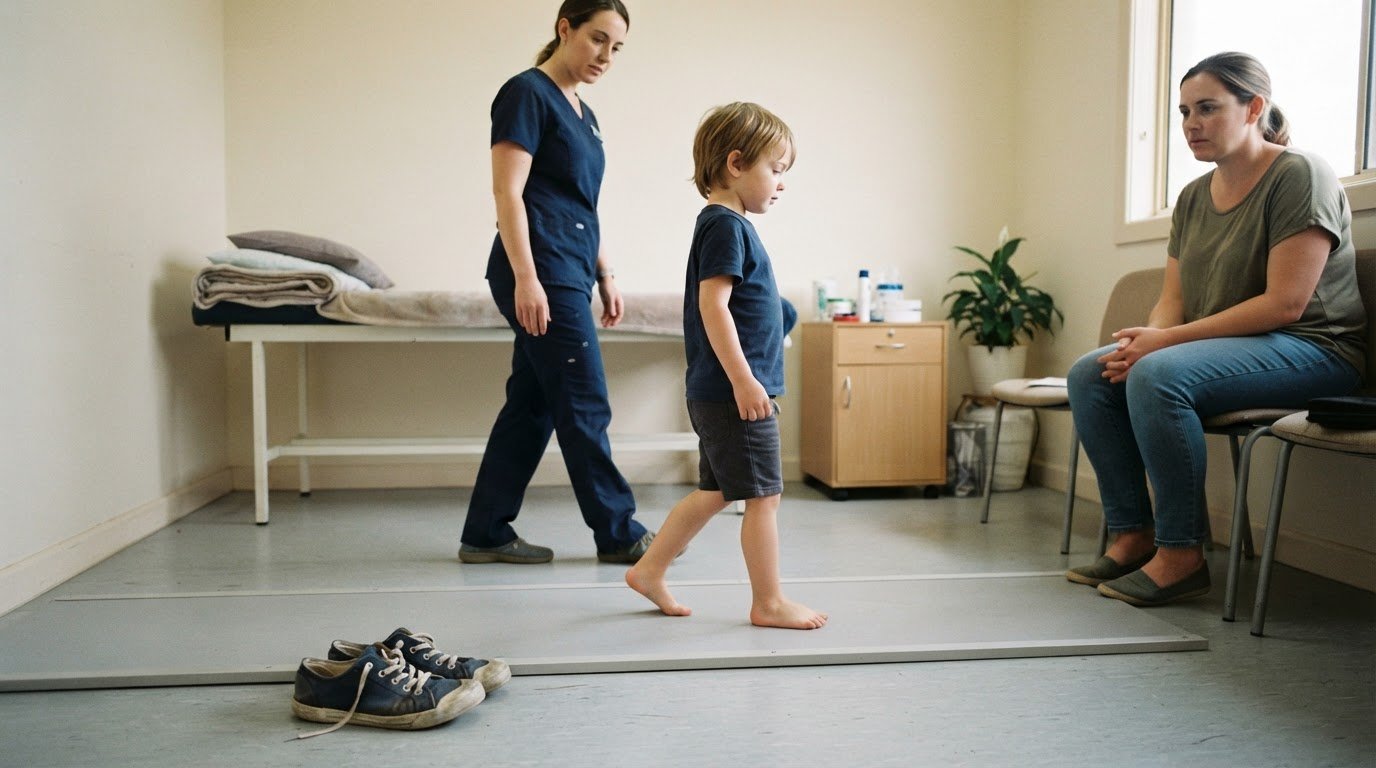
Night-time foot pain isn’t automatically a sign that a child is growing. Children’s feet hurting in the evening or after a busy day can fit the pattern of growing pains, usually described as aching or throbbing in the leg muscles that often eases by morning. But pain in the feet, persistent discomfort, or symptoms that affect walking and play can have another cause.
It’s understandable to feel concerned when a child wakes sore, especially if the discomfort keeps returning. Growing pains aren’t a diagnosis, so note when the pain occurs, where it’s felt and whether it continues during the day. This can help distinguish a familiar pattern from a foot problem that needs attention.
This article explains what growing pains typically feel like, how conditions such as heel pain and flat feet may differ, and what signs warrant professional assessment. You’ll also learn what a podiatry assessment at Narellan Foot Clinic can look at, from foot structure to walking patterns, and how care may be tailored to the cause of a child’s discomfort.
Key Takeaways
- Night-time aches that ease by morning may follow a growing-pain pattern, but foot discomfort can also have a specific cause.
- Notice whether pain continues during the day or affects walking, play, sleep or school participation.
- Persistent pain, limping, swelling or redness are signs to seek professional assessment.
- Flat feet can be part of normal development; ongoing discomfort and changes in activity help show when they may need attention.
- A podiatry assessment can examine foot structure and movement to guide care for a child’s symptoms.
Why Do Children Experience Foot Pain at Night?
Night-time aches may follow an active day, but foot pain can also come from a specific foot, heel or knee condition. When it occurs, where it’s felt, and how it affects walking, sleep and school can help distinguish these patterns.
Common causes of foot pain
Children’s foot pain can be associated with activity-related strain, gait or structural differences, growing-pain patterns, or conditions affecting the heel and knee. The distinction matters because pain around the heel, arch or ankle may need a different assessment from discomfort around the kneecap. Osgood-Schlatter disease is a named cause of knee pain in active children, so note whether symptoms are in the knee, foot or both.
Growing pains and night-time discomfort
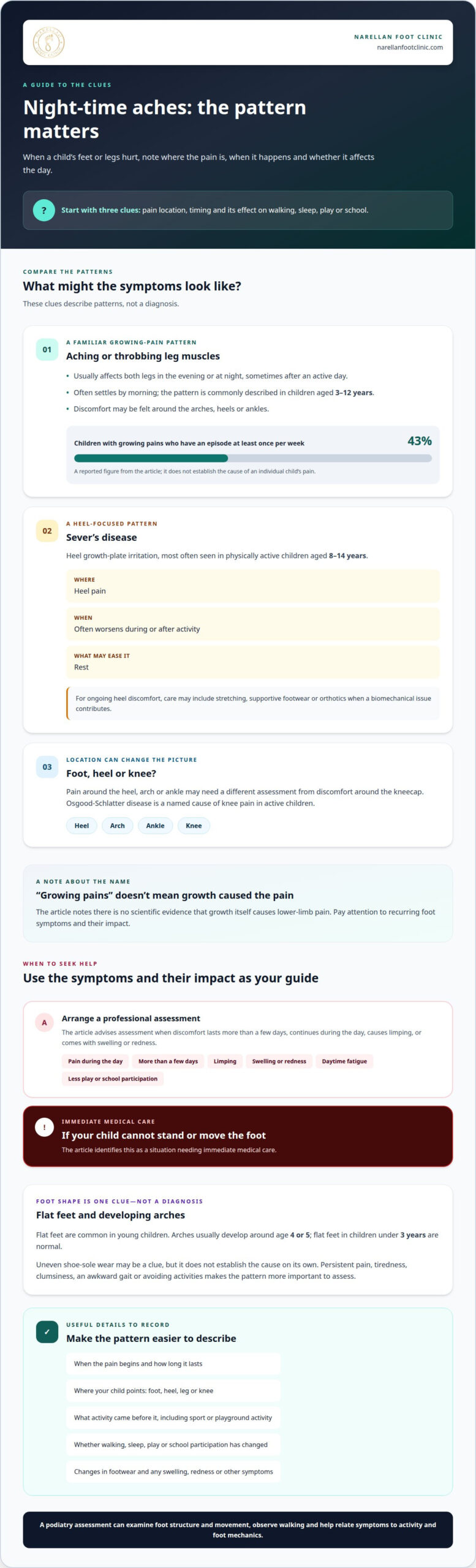
Growing pains are typically aching or throbbing sensations in leg muscles, most often in the evening or at night. Discomfort attributed to this pattern may follow physical activity, affect the arches, heels or ankles, and stop by morning. A reported 43% of children with growing pains experience an episode at least once per week. However, there’s no scientific evidence that growth itself causes lower-limb pain, so recurring foot symptoms deserve attention to their pattern and impact.
Sever’s disease symptoms and treatment
Sever’s disease is heel growth-plate irritation, most often seen in physically active children aged 8 to 14 years. Heel pain commonly worsens during or after activity and improves with rest, which can make it different from night-time muscle aches. Care options for ongoing heel discomfort may include stretching, supportive footwear or orthotics when a biomechanical issue contributes. An assessment helps relate the heel symptoms to activity and foot mechanics.
Pain can disrupt sleep and leave a child tired during the day. Night-time leg and foot pain may also contribute to lateness, school absences or less participation in class activities. A child who avoids playground games or struggles to walk comfortably during the day has symptoms beyond occasional evening aches. Track when the pain begins, where your child points, and whether it returns after sport or playground activity.
Consider a professional assessment if discomfort lasts more than a few days, continues during the day, causes limping, or comes with swelling or redness. Pain that leads to daytime fatigue also warrants attention. Record changes in walking, play and school participation to describe at the appointment. A healthcare professional can assess your child’s feet, gait and activity-related symptoms to help identify whether the cause is a foot condition, strain or another issue. If your child cannot stand or move the foot, seek immediate medical care.
What Are Growing Pains?
Growing pains usually describe aching or throbbing leg-muscle discomfort in children aged 3 to 12 years. Persistent foot pain or other symptoms may have causes beyond the familiar pattern of growing pains.
A familiar pattern is pain in both legs during the evening or night, sometimes after an active day, that settles by morning. Some children experience daily discomfort for over six months. The label “growing pains” doesn’t mean that growth itself caused the pain, so keep track of where your child hurts and whether symptoms return during the day.
Symptoms that continue during the day, limit walking or play, or cause a limp deserve professional assessment. Pain lasting more than a few days is another reason to arrange an evaluation. Note whether your child can join school activities comfortably or needs to stop because of foot or leg discomfort.
Some signs alongside persistent pain may indicate another cause and warrant medical evaluation. These include swelling, redness, fever, weakness, unusual fatigue or loss of appetite. A child with pain and a swollen, red foot needs more than reassurance that the discomfort is part of growing.
- Persistent or daytime pain: note how long it lasts and whether it interrupts walking, play or school.
- Limping or reduced movement: observe whether your child avoids putting weight on one foot.
- Swelling or redness: record where it appears and whether it accompanies ongoing pain.
- Other symptoms: tell the healthcare professional about fever, weakness, fatigue or appetite changes.
Some situations need urgent attention. If your child cannot stand on or move a foot, seek immediate medical care. This differs from familiar night-time aching that has resolved by morning: inability to use the foot can follow an injury or signal a more serious problem.
Foot shape can also help explain discomfort. Flat feet are common in young children, and arches usually develop around age 4 or 5. Uneven shoe-sole wear may be a clue, but it doesn’t establish the cause by itself. Persistent pain, tiredness, clumsiness, an awkward gait or avoiding activities makes the pattern more important to assess.
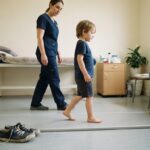
A healthcare professional can examine your child’s feet and observe their walking, then compare the arch while they stand and sit. With flexible flat feet, an arch may appear when the big toe is raised. Notes about shoe wear, pain timing and changes in school or play provide useful context for the assessment.
Before an appointment, write down when symptoms began, where your child points and what activities came beforehand. Include changes in footwear, sleep and school participation. These details help distinguish recurring night-time aches from pain linked to an injury, foot structure or another health concern.
Flexible and rigid flat feet
Flat feet describe a low or unformed arch, but the foot’s flexibility and symptoms matter more than its appearance alone. In children under 3 years old, flat feet are normal because the arches have not yet developed. A visible low arch in a young child doesn’t automatically mean a disease or a need for treatment.
Foot development continues through childhood: the bones and joints don’t completely develop until age 7. This helps explain why the shape and movement of a child’s feet can change as they grow. Rather than judging appearance alone, notice whether symptoms affect walking, play or everyday activity.
With flexible flat feet, the foot can move, and an arch may appear when the child raises their big toe. Some children have tired, aching feet after activity. A child’s walking pattern may vary, so notice any changes alongside other symptoms. These details help distinguish flexible flat feet from a more restricted foot.
Rigid flat feet are associated with more foot pain than flexible flat feet. The foot’s movement and arch response differ, so persistent discomfort deserves attention, especially if it changes how a child walks or joins activities. Tarsal coalition and vertical talus are possible underlying causes of flat feet, making an assessment useful when symptoms continue.
To help your child, notice how their feet move during everyday activities, not just when they’re standing still. For example, watch whether they tire during a walk, avoid running or seem clumsy. Swelling with persistent pain, an awkward gait, fatigue or avoiding activities adds useful context for an assessment.
- Flexible pattern: note tired, aching feet after activity or toes turning inward while walking.
- Rigid pattern: pay attention to ongoing pain and restricted movement.
- Daily impact: record clumsiness, fatigue or activities your child avoids.
- Foot changes: describe any swelling and when it occurs alongside discomfort.
A healthcare professional can examine your child’s feet and observe how they walk, then assess the arch while they’re standing or sitting. This helps connect foot shape with movement and symptoms, rather than treating appearance alone. Supportive shoes with arch support may help when flat feet are painful; stretching exercises can help flexibility in rigid flat feet.
Surgery for flat feet is uncommon and usually delayed until a child has finished, or nearly finished, growing. A low arch by itself doesn’t mean surgery is needed. The important factors are the type of flat foot, ongoing pain and how symptoms affect movement. A professional assessment can clarify whether care is needed and which options suit the child’s symptoms.
Ill-fitting footwear
Shoes that pinch, rub or lack support can contribute to foot discomfort during a child’s day. Fit matters at school, during playground activities and in sport, when children spend long periods on their feet.
Supportive and roomy footwear
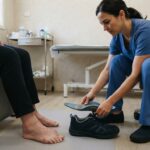
Supportive, roomy shoes let toes sit comfortably while the sole flexes through the ball of the foot. A tight toe box or stiff sole can make everyday walking uncomfortable. Check for pressure marks after shoes come off, and notice whether your child avoids a particular pair or changes how they walk.
A suitable shoe should flex at the ball of the foot but shouldn’t bend completely back on itself. Supportive shoes can help reduce foot discomfort, particularly during school and play. For sport, choose footwear that fits the activity and doesn’t squeeze the toes. Warm-ups and gentle stretching can also help prepare muscles for movement.
Choosing well-fitting children’s shoes
To choose well-fitting shoes in Australia, check your child’s shoe size every few months and assess the fit while they’re standing. Children’s feet grow quickly, so shoes that fitted recently may become tight. Look for comfortable toe room and a sole that bends at the ball of the foot without folding completely back.
School shoes deserve regular attention because children spend over 40 hours per week in them on average. Check fit, sole flexibility and signs of wear as part of routine shoe checks. Uneven wear on the soles can also be a clue to flat feet, though it doesn’t establish the cause of discomfort.
Try shoes with the socks your child usually wears, then check how each shoe fits. The toes shouldn’t feel squeezed, and the heel shouldn’t slip as your child walks. Ask them to walk around in both shoes, then look for rubbing, pinching or reluctance to keep them on. A shoe that feels fine while sitting may feel different during movement.
Fit can matter beyond general soreness. In children, ingrown toenails are commonly linked with poorly fitting footwear, nail picking or incorrect nail trimming. Keep toenails trimmed straight across rather than cutting down into the corners, and notice whether a shoe presses on a sore toe.
When discomfort appears after school or sport, compare the shoes your child wore that day and note where they feel pain. Check whether their toes have room, whether the sole flexes appropriately and whether the shoes show uneven wear. These observations can help identify whether footwear may be contributing. Persistent pain or limping calls for professional assessment.
Podiatry assessment and treatment options
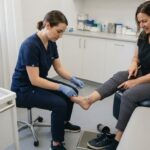
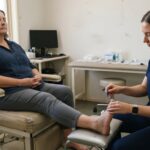
A podiatry assessment connects a child’s discomfort with foot structure, movement and daily activities. It can help distinguish a painful biomechanical issue from symptoms that need a different kind of medical evaluation.
A podiatrist may assess your child’s feet and lower limbs, then observe their walking and running patterns. Gross motor development, such as how a child moves during play, can also provide useful context. Tell the podiatrist where the pain occurs, when it starts and whether it affects school, sport or sleep. Heel pain after running, for example, gives different clues from soreness that continues while resting.
Mention swelling, redness, persistent daytime pain or limping. Also describe activity avoidance, fatigue and discomfort that lasts more than a few days. These details help guide the assessment towards possible causes, such as movement patterns, foot structure or activity-related strain. Bring your child’s usual shoes, as their fit and wear patterns may add useful context.
Care depends on the assessment findings. For ongoing discomfort linked with a biomechanical issue, options may include stretching, supportive footwear or orthotics. A child with painful flat feet may benefit from supportive shoes with arch support. For heel pain, simple treatment approaches can help children remain active while addressing discomfort.
- Stretching: exercises may be recommended to address flexibility or movement concerns.
- Supportive footwear: suitable shoes may help ease discomfort during everyday activity.
- Orthotics: custom devices may be considered when foot mechanics contribute to symptoms.
- Activity adjustments: rest and recovery matter when a child’s activity is aggravating pain.
The aim isn’t to prescribe the same treatment for every child. A podiatrist considers the location of pain, how the foot moves, the child’s activity and whether symptoms interfere with daily life. An exercise plan may suit one movement concern, while supportive footwear may be more relevant for painful flat feet.
An assessment can help identify concerns early, while a child’s feet and legs are still developing. Appropriate care can support strength and coordination, and reduce the likelihood of foot and lower-limb problems in adulthood. Persistent pain still deserves attention, even when a child can continue playing.
If discomfort keeps returning or changes how your child walks, arrange a Biomechanical Assessment to examine how foot mechanics relate to symptoms and movement.
Narellan Foot Clinic: Biomechanical Assessment
Narellan Foot Clinic offers Biomechanical Assessment for children with recurring foot discomfort, pain during activity or changes in how they walk. This assessment explores how foot structure and movement relate to symptoms, helping guide a care plan suited to the child’s needs.
If foot mechanics contribute to ongoing discomfort, Custom Orthotics may be considered as part of care. Bring notes about when pain occurs, activities your child avoids and any changes in their walking. These details help make the assessment relevant to everyday movement, from school routines to sport.
If your child’s foot pain persists or affects their activities, contact Narellan Foot Clinic to discuss an assessment.
Help your child move forward with confidence
A child’s comfort can change as their routines, activities and footwear change. If night-time aches keep returning, treat that pattern as a reason to take the next step rather than assuming the discomfort is simply part of growing. Understanding what may be contributing can help guide appropriate care and support your child’s confidence in everyday movement.
For children’s feet hurting repeatedly, a podiatry assessment can explore how foot movement relates to discomfort. Narellan Foot Clinic offers Biomechanical Assessment and Custom Orthotics, as well as Ingrown Toenail Surgery for painful ingrown nails. The right option depends on the concern being assessed.
Share your concerns with a podiatrist and discuss what you’ve noticed about your child’s comfort and movement. Contact Narellan Foot Clinic to take the next step towards understanding your child’s foot pain.
Frequently Asked Questions
What Can Help?
What helps depends on the cause and where the pain occurs. After a tiring sports day, pause the activity that aggravates symptoms, choose comfortable supportive shoes and try gentle foot or calf stretches. A warm bath can help your child unwind before bed. If discomfort keeps returning or affects walking, arrange an assessment to explore whether movement or foot structure is contributing.
How can you care for your child at home?
For a familiar evening ache, try gently rubbing the sore area or a warm bath, then help your child settle for sleep. Don’t push through an activity that makes the pain worse. Keep a simple record of the day’s sport, footwear and when symptoms began. If your child repeatedly wakes sore or struggles with daytime activities, share that pattern with a health professional.
My Child’s Feet Always Hurt – What’s Going On?
Ongoing foot pain can have a specific cause, so don’t assume it’s simply part of growing. Note whether the discomfort affects one foot or both, appears during activity or continues at rest. Watch for limping, avoiding activities or changes in walking. Persistent pain, especially with swelling or redness, warrants professional assessment to identify what may be affecting your child.
What are common causes of foot pain in children?
Common causes include activity-related strain, poorly fitting footwear, and differences in foot structure or walking mechanics. Heel growth-plate irritation, known as Sever’s disease, can cause pain during or after activity. Kohler disease is another possible cause, often occurring in children aged five and ten years. A sore toe may relate to an ingrown toenail, particularly if shoes press on it.
When should a child with foot pain see a doctor urgently?
Seek immediate medical care if your child cannot stand on or move the affected foot. Prompt medical evaluation is also important if persistent pain comes with swelling, redness, fever, weakness, unusual fatigue or loss of appetite. These symptoms can point to a cause beyond ordinary aches. If your child can walk but keeps limping or has pain during the day, arrange an assessment rather than waiting for it to pass.
How is foot pain in children diagnosed and treated?
A podiatrist can ask about your child’s pain and observe how they walk or run, then examine foot movement and structure. Mention activities that trigger discomfort and any changes in school or sport participation. Care depends on the findings: options for biomechanical discomfort can include stretching, supportive footwear or orthotics. The aim is to match treatment to the cause, rather than assume every sore foot needs the same approach.
What home care can relieve a child’s sore feet?
After a day that leaves your child’s feet sore, pause activities that bring on the pain and allow time to rest. Gentle massage, a warm bath or easy foot and calf stretches may help with tiredness. Keep movement comfortable and stop a stretch if it hurts. Check that shoes aren’t squeezing the toes. If pain persists, worsens or changes your child’s gait, seek an assessment.
Can growing pains cause foot pain in children?
Growing-pain patterns usually involve aching or throbbing leg muscles, but discomfort attributed to them may also be felt in the arches, heels or ankles. It often occurs at night and can follow a physically active day. Growth itself hasn’t been shown to cause lower-limb pain. Foot pain that continues during the day, limits activity or repeatedly affects walking needs assessment for another possible cause.